2026
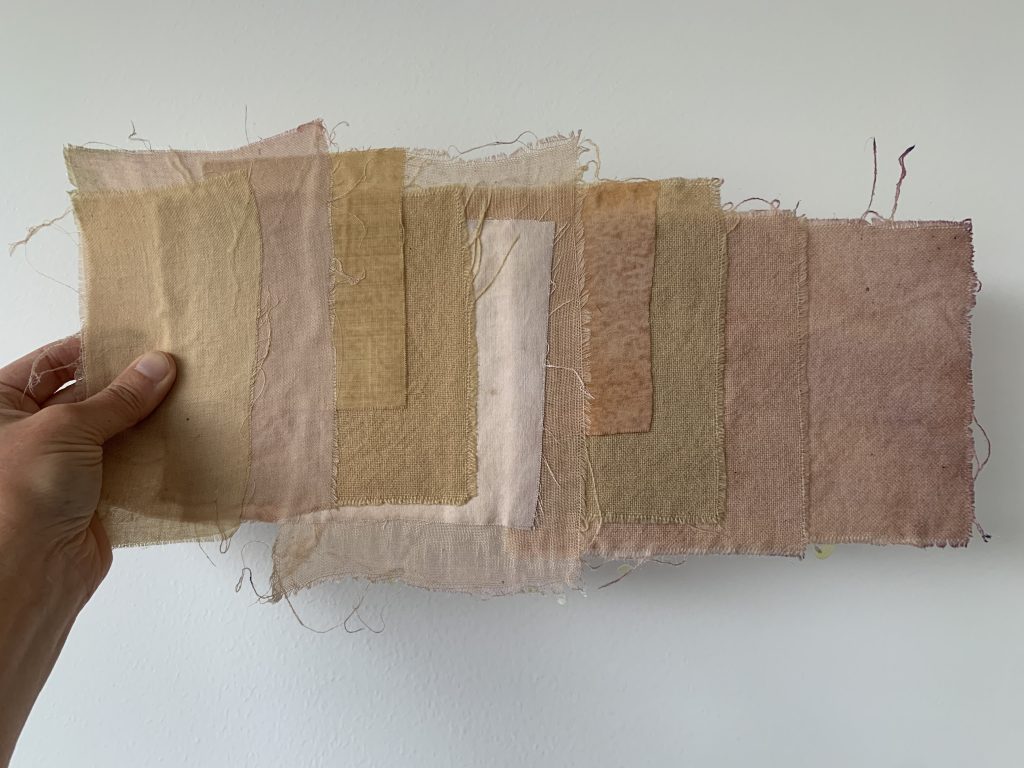
Irreversible Color Expressions No.2
Abstract
Through The Sweater, a practice-based design project, established color conventions are examined by means of a hand-knitted garment. By shifting the understanding of color from a stable and controlled parameter to a mutable and situated phenomenon, the project explores how changing color and form can renegotiate the relationship between expression, material, use, and temporality. The Sweater has been part of a personal wardrobe for over a decade, and a conversation with its wearer is presented here. The work aims to open up alternative perspectives on quality, value, and lifespan in textile expressions.
A continuation of the project Irreversible Color Expressions Åland_2013 Report no. 1 (Worbin, 2013). It is, however, not a follow-up in the sense suggested in the first report, namely, to produce a visual comparison of the textiles over time. It did not feel meaningful to invest such extensive resources in attempting to reproduce a specific color in one medium (textile) and translate it into another (digital image), as too much effort was directed toward the documentation itself. Instead, it appeared as a laborious act of verification at an overly early stage of a process that is inherently relative.
The color expression of textiles exists in relation to the material from which the textile is made, as well as to the plant itself (where it has grown, at what stage in its life cycle, or which parts have been used). Furthermore, geographical location, season, and the conditions under which dyeing has taken place, along with how the dyed textiles have been stored and used, all continue to affect the color expression. It was, quite simply, irrelevant to present the results in that way at that stage. Therefore, this continuation takes on a different character, focusing on the phenomenon of color change and its experiential dimension, both inherently norm-challenging and requiring increased reflection and new exploratory approaches within the framework of a new design philosophy.
Download publication from https://researchoutlet.se
2025
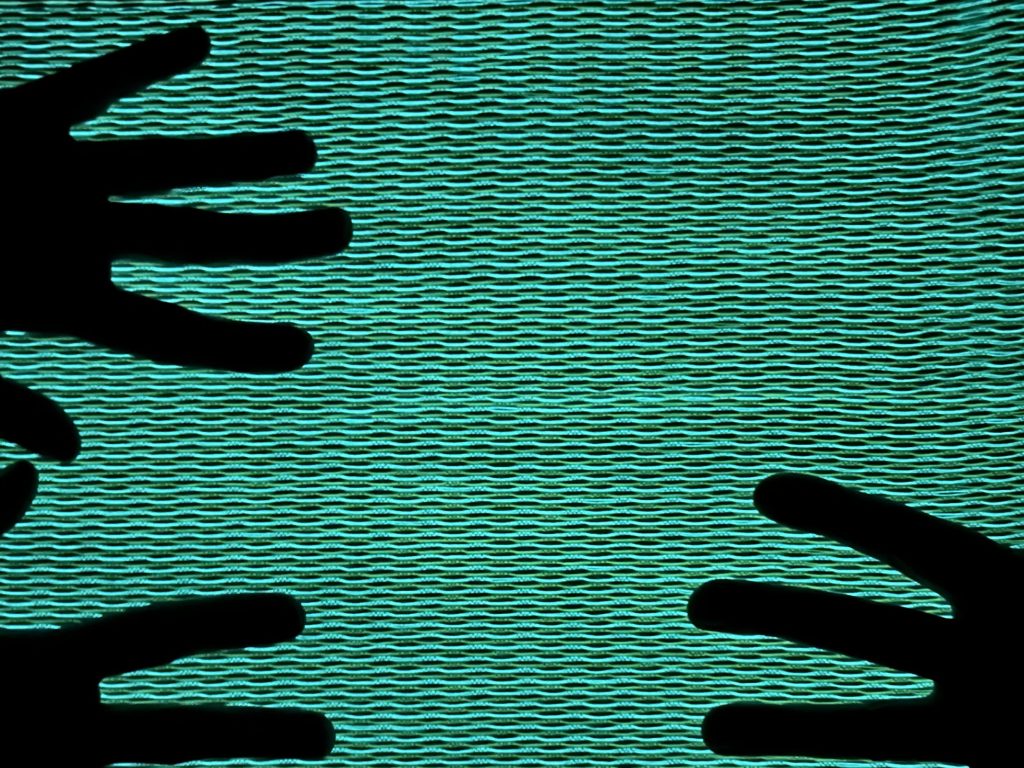
Entangled in the design of a relational materiality: Beyond smart textiles picture from the process
Bang, A.L. Dumitrescu, D. Harsaae, M. Ladekarl, I.M. Landin, H. Lewis, E. Latusaari, M. Lawrynowicz, A. Miettunen, K. Mohan, M. Nyberg, M. Pedersen, L. Silva, P. Vaara, M. Vapaavouri, J. Worbin, L (2025) Entangled in the design of a relational materiality: Beyond smart textiles. Exhibited at, and in proceedings of Nordes 2025: Relational Design, 6-8 August 2025, pp.726-734
Exhibition at gallery Fredland, Arild
ME WE Textiles The textile jacquard surface pattern is designed to initially convey the appearance of a traditional textile pattern expression. The repeated motif is constituted by the word “ME,” mirrored into “WE” and integrated into the jacquard weave structure. Through this construction, the pattern units “WE” emerge subtly within the woven textile surface under daylight conditions, while in darkness the motif “ME” becomes perceptible through fluorescent luminescence. This dynamic textile surface pattern thereby shifts between visible ME–WE states in response to changing light conditions and temporality.
Acknowledgements ME WE weaves was produced in collaboration with the Swedish School of Textiles in Borås during 2024-2025 as a part of the program Beyond e-Textiles; Nordic network on smart light-conversion textiles beyond electric circuits. A collaboration between University of Turku (UTU), VIA University College (VIA), University of Borås (UB), and Iceland University of the Arts (IUA), funding from Nordic Programme for Interdisciplinary Research – NordForsk
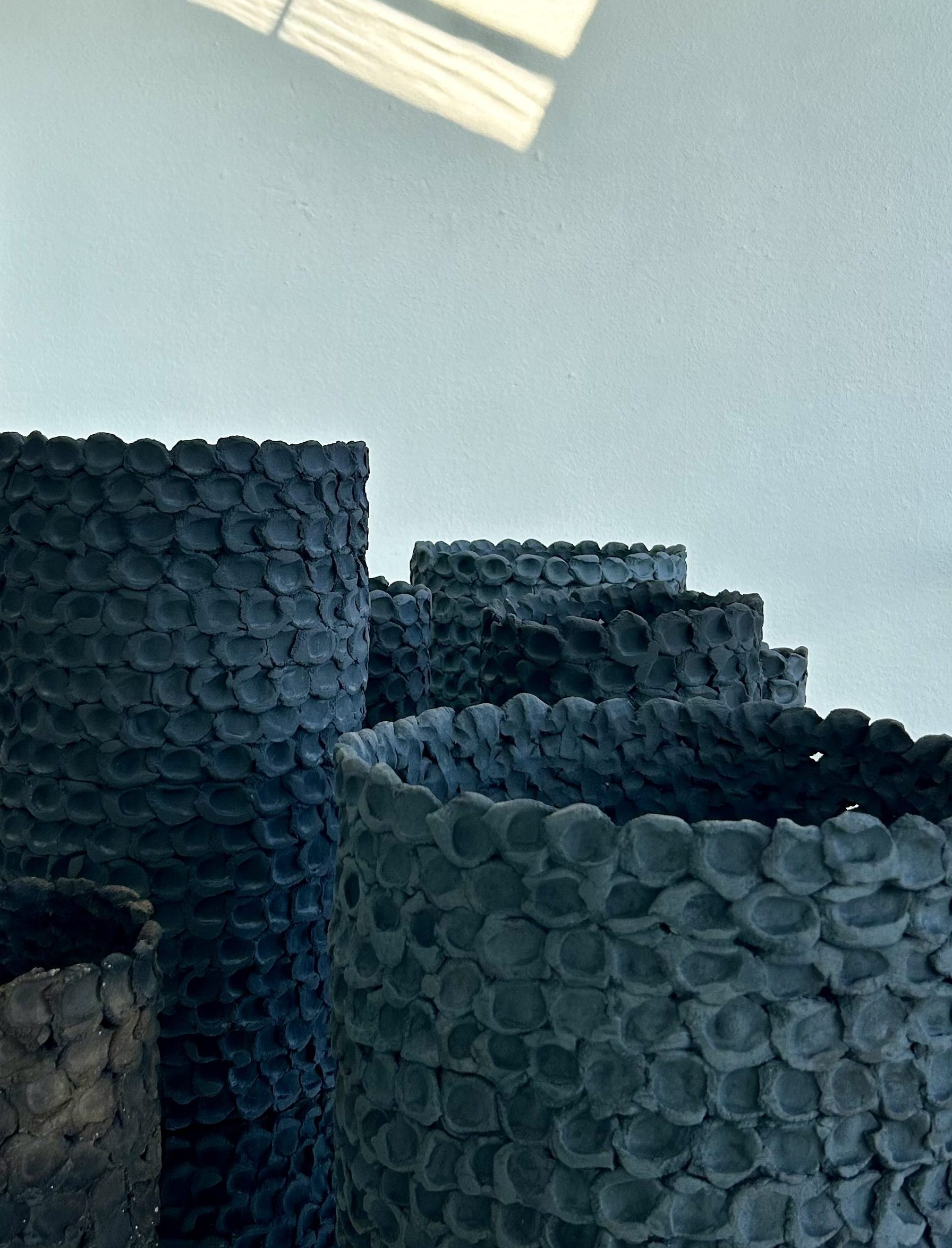
RA MA DA SA SE SO dark series
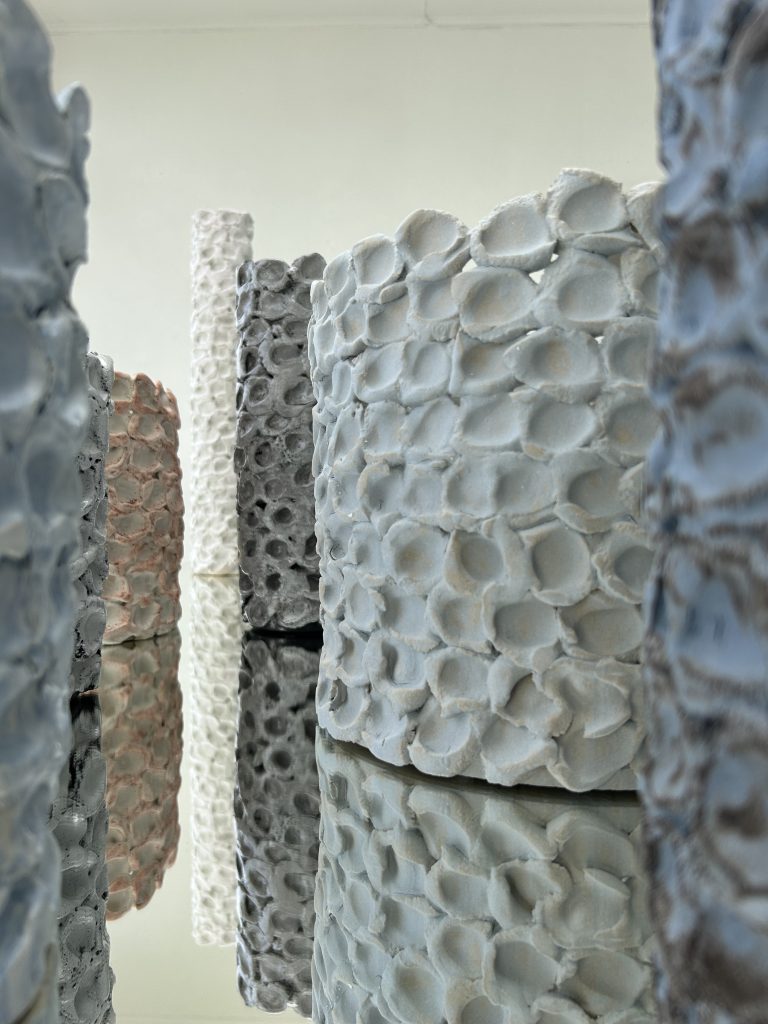
RA MA DA SA SE SO light serie
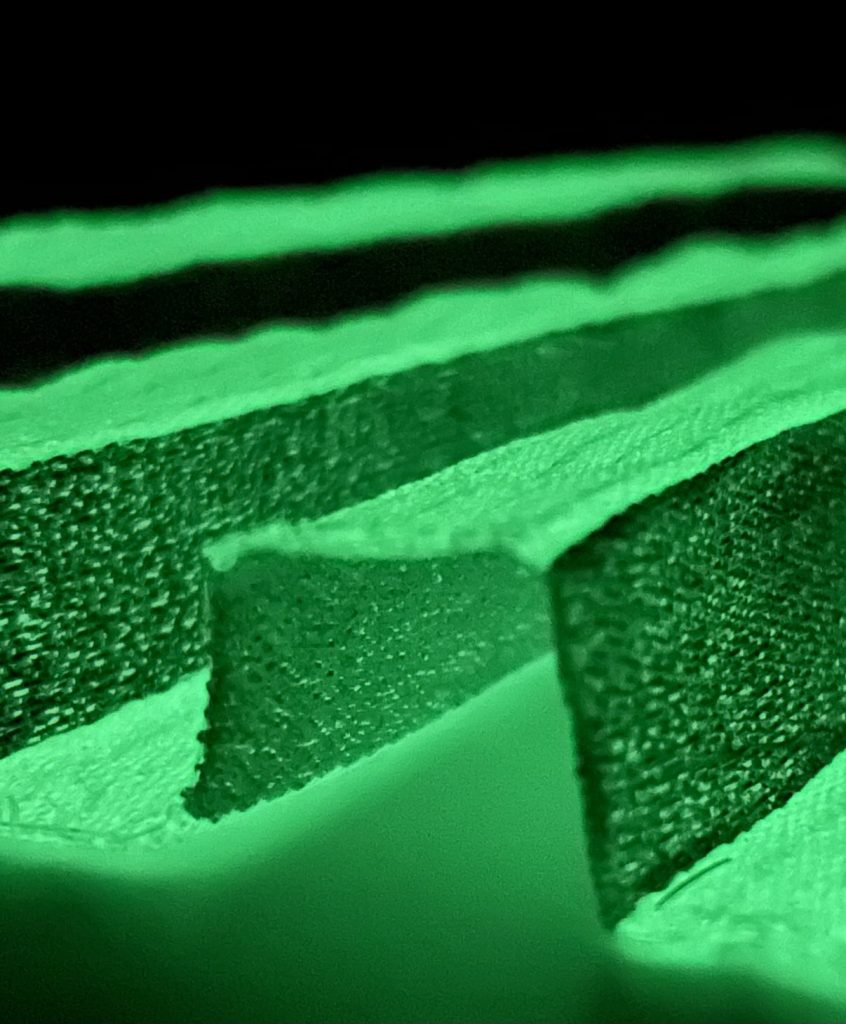
Beyond Entangled – Textile Rhythms of Sunlight picture showing a woven structure from the process
Dumitrescu, D., Landin, H., Lewis, E., Nyberg, M., Rödby, K., Worbin, L. (2025) Beyond
Entangled – Textile Rhythms of Sunlight. EXHIBITED AT Scales in Textiles, ArcInTex, Beyond e-Textiles Conference 2025, April 8-10 2025, Aalto University, Helsinki. Curators: Pirjo Kääriäinen and Mithila Mohan